

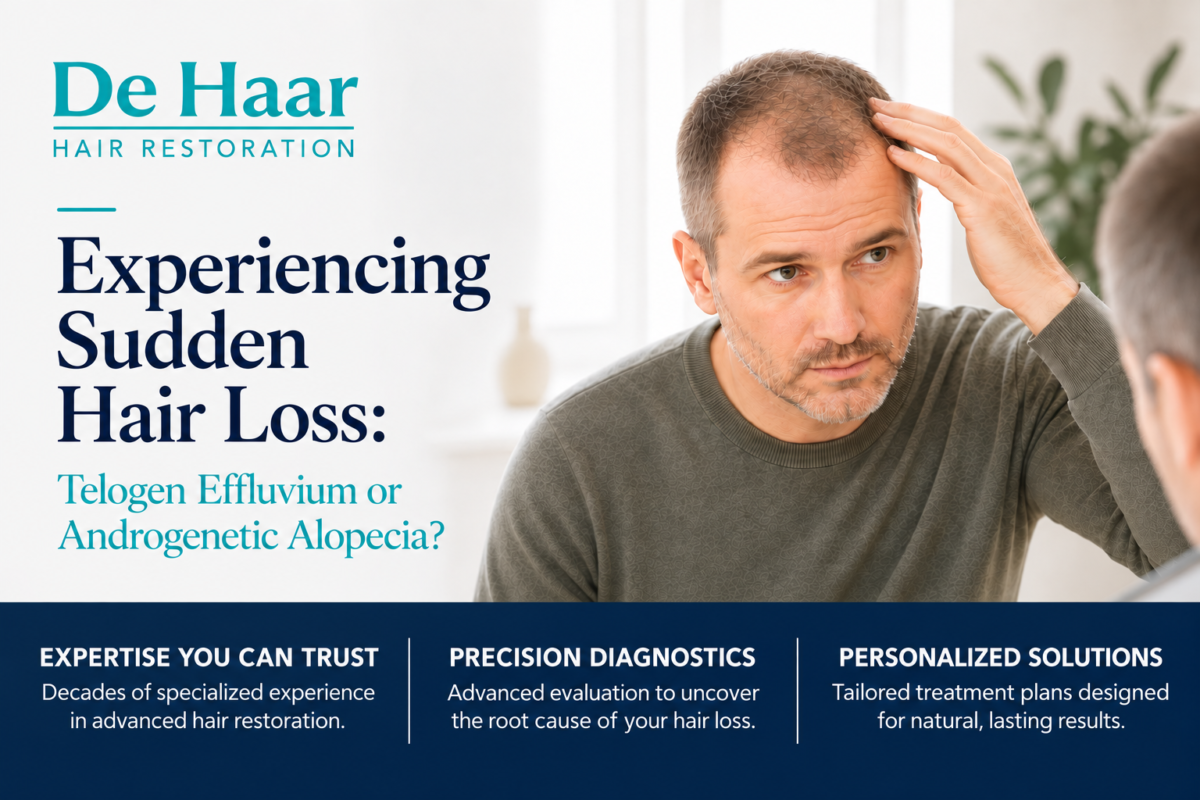
Experiencing Sudden Hair Loss: Telogen Effluvium or Androgenetic Alopecia?
Telogen effluvium is one of the most common causes of sudden, diffuse hair loss and shedding. It is a temporary disruption of the normal hair growth cycle. Under normal conditions about 85 to 90% of scalp hairs are in the anagen phase, the growth phase of the hair. Around 10 to 15% are in the telogen phase which is the resting and shedding phase of the hair cycle.
What causes telogen effluvium?
In telogen effluvium, a stressful trigger disrupts the hair cycle and causes a larger than normal number of hairs to shift prematurely into the telogen phase. These hairs are then shed several months later, often all at once.
When does telogen effluvium occur?
One of the most confusing aspects of telogen effluvium is the delayed onset. The triggering event occurs first then the hair follicles enter the telogen phase and shedding begins 2 to 4 months later. This delay often makes it difficult for patients to connect their hair loss to the original cause.
What are the common causes of telogen effluvium?
Common triggers of telogen effluvium are often psychological or emotional stress. These triggers can include:
- acute illness
- chemotherapy
- high fevers
- surgery or hospitalizations
- rapid weight loss
- crash dieting
- sudden hormonal changes and thyroid imbalance
- severe emotional stress
- nutritional deficiencies in Iron, protein, or zinc
- medications
How does telogen effluvium present itself?
Telogen effluvium typically presents as diffuse hair shedding across the entire scalp, and one may notice an increase in the falling out of the hair while washing and brushing the hair or on pillows. Often a thinning ponytail and reduced overall hair density is noticed. In general, there is a normal looking scalp with no scarring or inflammation. Importantly the frontal hairline is generally preserved which sometimes helps distinguish telogen effluvium from other forms of hair loss.
Is telogen effluvium triggered hair loss permanent?
Telogen effluvium hair loss in most cases is not permanent. It is generally reversible once the underlying trigger is addressed but it sometimes can become chronic if the causes are not dealt with.
When will my hair grow back?
Hair regrowth typically begins within 3 to 6 months, though full density may take 9 to 12 months to return, however telogen effluvium can sometimes become chronic if the trigger persists.
How do I know if my hair loss is genetic or caused by a trigger?
Unmasking underlying androgenetic alopecia especially in genetically predisposed individuals is important and this is why proper diagnosis by a hair loss specialist is essential. read the science behind hair loss
How can I tell the difference?
It is important that the difference between hair loss in androgenetic alopecia and telogen effluvium be identified. The key distinctions of telogen effluvium is that it has a sudden onset, being trigger-based and the excessive shedding is often reversible whereas in diffuse hair loss caused by androgenetic alopecia, there is a gradual progression of hair loss that is influenced by genetics and hormones along with miniaturization of the hair follicles requiring long term management. A hair loss specialist may take a thorough medical history, do a scalp examination and sometimes Trichoscopy or bloodwork to distinguish the difference. read hair loss diagnosis
Is there a cure for telogen effluvium?
There is no single medication that cures telogen effluvium, but management focuses on identifying and correcting the triggers that caused it such as addressing Iron, and vitamin or nutritional deficiencies if present, managing stress and sleep and instituting gentle hair care practices. In some cases, topical minoxidil and other treatments may be recommended to support regrowth, particularly if shedding masks an underlying patterned hair loss.
Avoiding unnecessary panic
Although telogen effluvium can be emotionally distressing it is one of the most treatable causes of hair loss. Education, reassurance and proper evaluation are often the most important aspects of care. Early recognition helps prevent unnecessary panic, inappropriate treatments and delayed diagnosis of other conditions.
If you are experiencing sudden or excessive hair shedding, a professional evaluation and diagnosis to determine the cause will allow you to start treatment early and stop the loss no matter the cause.
