
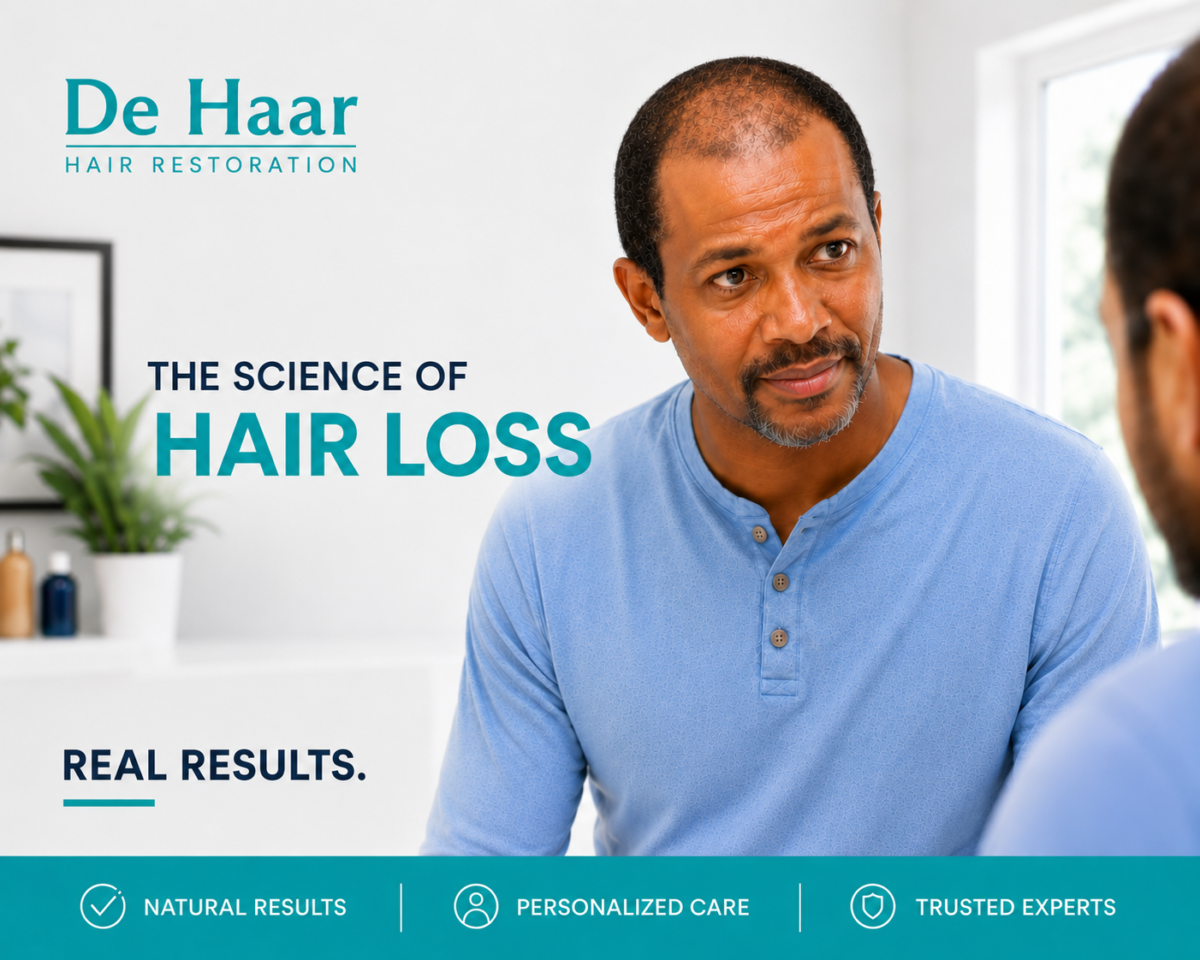
Hair loss or alopecia occurs when the natural hair growth cycle is disrupted. To understand this, it’s crucial to explore the biology of the scalp, hair follicles and the phases of hair growth. Here’s a breakdown of what happens at the microscopic level in the scalp and factors that lead to hair loss and what you can do to mitigate the damage.
The Hair Growth Cycle
Hair grows in a cyclical pattern that consists of phases. The “anagen phase” or growth phase is where there is active hair growth from the follicle. This phase typically last two to seven years depending on genetics, environmental factors and lifestyle. About 85 to 95% of your hair is in the antigen or growth phase at any given time. The next phase is the “catagen phase” or transitional phase. This phase generally last from two to three weeks and marks the end of the active growing stage. The telogen phase follows and at this point the follicles begin to shrink and the hair separates from the follicle at its base but still sits there. The “exogen phase” is when you’re hair sheds. After the hair falls out, the follicle will rest for approximately two to four months before re entering the anagen phase again. Hair loss occurs when this cycle is disrupted thereby reducing the time spent in the anagen phase and increasing the length of time in the telogen phase.
Hair follicles are small pocket-like structures in the scalp that produce and anchor hair. These follicles rely on a healthy blood supply and receive oxygen and nutrients. When disrupted, the follicles can shrink. This process called miniaturization. These shrunken follicles produce thinner and weaker hair, eventually they become dormant and stop producing hair altogether.
Factors That Damage The Hair Follicles
A hormone called Dihydrotestosterone, often referred to as DHT plays a major role in hair loss and particularly in people with a genetic predisposition to balding. The hormone testosterone which is present in both men and women converts to DHT. This hormone binds to receptors in the hair follicles causing them to shrink and eventually stop producing hair. This shrinkage leads to androgenic alopecia which is the most common type of hair loss in both men and women.
Fluctuations in estrogen, cortisol or thyroid hormones can also disrupt the growth cycle. This results in poor circulation to the scalp and a reduction in the delivery of oxygen and nutrients to the hair follicles, impairing their ability to sustain growth.
Scalp inflammation is another factor that damages hair follicles and the surrounding tissues. This causes conditions like alopecia areata or scarring alopecia and involves the immune system attacking the hair follicles. Stress can also play a major role. High levels of stress can trigger telogen effluvium, a condition where more hairs prematurely enter the telogen phase and the hair fall out in clumps. In addition to biological causes, external factors can weaken the scalp and hair follicles. Excessive styling and overuse of hot hair dryers and hair irons, chemical treatments and tight hairstyles can cause traction alopecia and breakage. Traction alopecia is where mechanical forces pull on the hair Causing breakage.
Dietary deficiencies such as a lack of protein, iron and essential vitamins like biotin and vitamin D can weaken the hair structure. Pollution can also pay a role in alopecia. Environmental pollutants can build up on the scalp, clogging follicles in contributing to hair thinning. A healthy scalp is essential for hair growth.
Common scalp conditions linked to hair loss include seborrheic dermatitis, folliculitis and dry scalp. Hair loss can be broadly classified into genetic and acquired categories. We say broadly because given our individual lifestyles and habits, these categories overlap.
Genetic androgenic alopecia is an inherited sensitivity in the follicle to DHT leading to gradual thinning an eventual baldness. Acquired hair loss is hair loss that is induced by stress, illness, medications or environmental factors.
What You Can Do To Mitigate The Damage
Scientists continue to gain new insights into hair loss. Stem cell research plays an important role in the understanding hair regeneration. Researchers are now exploring how to replicate hair follicles in laboratories for transplantation, but they are not there yet. Understanding the science of hair loss paves the way for prevention and treatments in order to mitigate hair loss, include maintaining a balanced whole foods diet rich in nutrients that are essential for hair health. Using gentle shampoos and avoiding harsh styling practices helps maintain the health of the hair and the follicles. It is not necessary to wash the hair daily as the stripping away of natural oils that help protect the integrity of the hair make it susceptible to damage. Light scalp massage can help to improve blood flow and stimulate growth. Managing stress and taking time for yourself each day can help prevent telogen effluvium. If you are experiencing hair loss, see a hair loss specialist that will actually diagnose the cause and give you the options that will help you maintain the hair you have left and help restore what you have lost. Follicles that are damaged can be restored but once they are no longer viable they will not produce hair no matter the treatment so hair loss is always best if it is addressed early. This allows for more treatment options, arresting the loss and restoring and reviving your weakened follicles.
The Bottom Line
Hair loss is a complex condition influenced by genetic, hormonal and environmental factors and by understanding what happens on a cellular level in the scalp, individuals can take protective steps to protect their hair and explore targeted treatments to combat alopecia. A healthy scalp is truly the foundation for healthy hair.
One comment
Pingback: Hair Loss Diagnosis: Your Complete Guide to Understanding the Cause Before Choosing Treatment – De Haar Hair Restoration
Comments are closed.