
Megasession Hair Transplants
Hair transplantation has evolved dramatically over the past two decades. What was once considered a procedure for treating small areas of hair loss has become a sophisticated surgical solution capable of restoring extensive baldness in a single operation. One of the most significant advancements has been the development of the hair transplant megasession. For patients with advanced hair loss, the idea of restoring thousands of hairs in one procedure can be incredibly appealing. However, a megasession is not simply about transplanting the highest possible number of grafts. It requires careful planning, exceptional surgical skill, an experienced team, and an understanding of long-term hair restoration principles. In this article, we’ll explore what a megasession is, who is an ideal candidate, the advantages and limitations, and why quality should always take precedence over quantity.
What Is a Hair Transplant Megasession?
A megasession refers to a hair transplant procedure involving the transplantation of a very large number of follicular unit grafts during a single surgical session. Although there is no universally accepted definition, most surgeons consider procedures involving 3,000 to 5,000 grafts or more to be megasessions. Because each graft contains anywhere from one to four hairs, a megasession may transplant 7,000 to well over 12,000 individual hairs during a single procedure. The goal is to maximize cosmetic improvement while minimizing the number of surgeries a patient requires. Modern Follicular Unit Extraction (FUE) has made megasessions increasingly common by allowing individual follicular units to be harvested with minimal scarring while preserving a natural appearance.
Understanding Hair Grafts
Patients often confuse hairs with grafts. A graft is a naturally occurring group of hair follicles that are transplanted together. Each graft may contain:
- One hair
- Two hairs
- Three hairs
- Occasionally four or more hairs
For example: 4,000 grafts may contain approximately 8,000 to 10,000 hairs. 5,000 grafts may contain well over 12,000 hairs depending on donor characteristics. This is why reputable clinics discuss graft numbers rather than individual hairs.
Who Needs a Megasession?
Megasessions are typically reserved for individuals with moderate to advanced hair loss, including:
- Extensive male pattern baldness
- Significant crown thinning
- Large areas of frontal recession
- Previous unsuccessful hair transplants requiring correction
- Patients who wish to maximize coverage in a single procedure
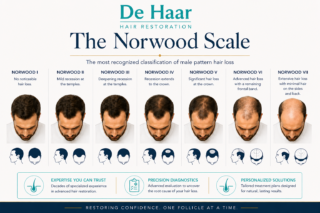
Many patients with Norwood Class V, VI, or VII hair loss may require megasessions to achieve meaningful cosmetic improvement. However, not every patient with advanced hair loss is automatically a candidate.
The Importance of Donor Hair
Every hair transplant relies on a finite resource the donor area, usually located around the back and sides of the scalp. These hairs are genetically resistant to androgenetic alopecia and are therefore suitable for transplantation. Because donor hair is limited, every graft removed should be treated as a valuable resource. Experienced surgeons evaluate:
- Donor density
- Hair shaft diameter
- Hair color
- Curl or wave
- Skin-to-hair color contrast
- Donor laxity (for FUT)
- Overall donor health
Patients with thick, wavy hair often achieve greater visual density than patients with very fine, straight hair, even when the same number of grafts is transplanted.
Not Everyone Is a Candidate
Although megasessions are increasingly common, they are not appropriate for everyone. Ideal candidates generally have healthy donor density and the following;
- Stable pattern hair loss
- Good scalp health
- Realistic expectations
- Adequate blood supply to the scalp
- Good overall health
Patients who may not be ideal candidates include those with:
- Diffuse unpatterned alopecia
- Active scarring alopecia
- Severe donor depletion
- Poor scalp vascularity
- Certain autoimmune conditions
- Uncontrolled diabetes
- Significant smoking history affecting healing
An experienced hair restoration physician performs a comprehensive evaluation before recommending a large procedure.
Planning a Megasession
A successful megasession begins long before surgery. Planning involves balancing immediate cosmetic improvement with long-term preservation of the donor supply. Factors considered include:
- Current Hair Loss
- How much hair has already been lost?
- Future Hair Loss
- How much additional loss is expected?
- Family History
- Does the patient have a strong genetic pattern toward advanced baldness?
- Age
Younger patients often require more conservative planning because future hair loss remains unpredictable.
Medical Therapy
Patients taking medications such as finasteride or minoxidil may maintain existing hair longer, allowing more predictable surgical planning.
Why Hairline Design Matters
One of the biggest mistakes in hair transplantation is placing too many grafts into the hairline without considering future hair loss. An aggressive, low hairline may look attractive today but can become unnatural if surrounding native hair that continues to thin. Instead, experienced surgeons create hairlines that are:
- Age appropriate
- Natural
- Irregular rather than perfectly straight
- Designed for long-term appearance
Megasessions should never sacrifice intelligent hairline design simply to maximize graft numbers.
FUE and Megasessions
Modern megasessions are most commonly performed using Follicular Unit Extraction (FUE). Advantages include:
- No linear scar
- Faster recovery
- Ability to wear shorter hairstyles
- Less postoperative discomfort
- Excellent cosmetic outcomes
Large FUE procedures require efficient coordination between harvesting, graft preparation, and implantation. Grafts that spend as little time outside the body as possible to maximize survival.
Why Surgical Team Experience Matters
Large procedures require an exceptionally experienced surgical team. A megasession may involve:
- Thousands of extraction sites
- Thousands of recipient sites
- Continuous graft sorting
- Hydration of grafts
- Careful handling of follicles
- Strategic placement for natural density
Every graft represents living tissue. Poor handling can damage follicles before they are implanted. Success depends not only on the surgeon but also on the expertise of the entire surgical team.
Does a Larger Session Mean Better Results?
Not necessarily. One of the biggest misconceptions in hair transplantation is that more grafts automatically produce better results. In reality, successful outcomes depend on:
- Proper graft survival
- Appropriate graft distribution
- Natural hairline design
- Strategic density
- Long-term planning
Overloading one area with grafts may actually reduce survival if blood supply becomes compromised. The objective is not to transplant the highest possible number it is to transplant the right number.
The Importance of Graft Survival
Modern techniques allow excellent graft survival rates when follicles are handled properly. Successful graft survival depends on:
- Gentle harvesting
- Minimal trauma
- Proper hydration
- Controlled temperature
- Short out-of-body time
- Careful implantation
Experienced clinics follow meticulous protocols throughout the procedure to protect every follicle.
Can a megasession bring back the hair you had in your 20’s before extensive hair loss?
Although megasessions can produce dramatic improvement, patients with extensive baldness still require prioritization. Most surgeons focus on:
- Frontal hairline
- Frontal forelock
- Mid-scalp
- Crown (if donor supply allows)
The frontal scalp frames the face and generally provides the greatest cosmetic benefit. Because the crown consumes a tremendous number of grafts, it may be treated during a second procedure or managed more conservatively.
Managing Expectations
Hair transplantation creates the illusion of density, not the same exact density present before hair loss began. Natural hair density may exceed 80 to 100 follicular units per square centimeter. Hair transplantation typically restores a fraction of this density while still creating a remarkably natural appearance. Patients should understand that excellent cosmetic improvement does not necessarily mean returning to the hair density they had at age 18.
Recovery After a Megasession
Recovery is generally similar to a smaller procedure, patients may experience:
- Mild swelling
- Temporary redness
- Scabbing
- Tightness
- Mild discomfort
Most patients resume normal daily activities within several days. The transplanted hairs typically shed during the first month before new growth begins. Growth usually follows this timeline:
- 1 month: Shedding phase
- 3–4 months: Early new growth
- 6 months: Noticeable improvement
- 9–12 months: Significant cosmetic results
- 12–18 months: Final maturation
Hair continues to thicken and mature over time.
The Role of Medical Therapy
A hair transplant restores transplanted hairs but does not stop the progression of genetic hair loss. Many patients benefit from medical therapy to preserve existing native hair. Depending on the individual, treatment may include:
- Oral or topical finasteride
- Oral or topical minoxidil
- Low-level laser therapy
- Platelet-Rich Plasma (PRP)
- Microneedling including with Biologics
- Nutritional evaluation when appropriate
Combining surgery with medical management often produces the most durable long-term outcome.
Risks of Chasing High Graft Numbers
Unfortunately, some clinics advertise extremely large graft counts as a marketing strategy. Patients should be cautious if they encounter claims such as:
- “Guaranteed 7,000 grafts in one day.”
- “Unlimited grafts.”
- “No donor limitations.”
Every patient has biological limits. Attempting to harvest excessive grafts is unethical and may result in:
- Donor overharvesting
- Visible thinning in the donor area
- Reduced graft survival
- Increased scarring
- Poor long-term options if additional procedures become necessary
A reputable surgeon prioritizes donor preservation over impressive numbers.
The Value of a Personalized Treatment Plan
No two patients experience hair loss in exactly the same way. The best surgical plan considers:
- Facial proportions
- Hair characteristics
- Age
- Lifestyle
- Future hair loss
- Donor availability
- Personal goals
Some patients achieve excellent results with 2,500 grafts, while others may require 5,000 or more over multiple procedures. Customization is far more important than achieving an arbitrary graft count.
Choosing an Experienced Hair Restoration Surgeon
A megasession is one of the most technically demanding procedures in hair restoration. When selecting a clinic, patients should look for:
- Comprehensive hair loss diagnosis before surgery
- Experience with advanced FUE procedures
- Consistent natural-looking results
- Long-term treatment planning
- Transparent discussion of graft expectations
- Honest recommendations regarding donor limitations
Hair transplantation should never be viewed as simply moving hair from one place to another. It is a carefully planned reconstructive procedure that requires both surgical precision and artistic judgment .Read how to choose a hair transplant surgeon
Conclusion
Hair transplant megasessions have transformed the treatment of advanced hair loss, making it possible for many patients to achieve dramatic improvements in a single procedure. However, the success of a megasession depends on far more than the number of grafts transplanted. Careful patient selection, meticulous surgical technique, thoughtful hairline design, and preservation of the donor area are all essential for achieving natural, lasting results.
At De Haar Hair Restoration, every patient receives a comprehensive hair and scalp evaluation before surgery. Rather than focusing solely on graft numbers, our goal is to create a personalized treatment plan that balances immediate cosmetic improvement with long-term hair preservation. By combining advanced FUE techniques with evidence-based medical therapies when appropriate, we strive to deliver results that look natural today and continue to look natural for many years to come.
