
Peptide Therapy for Hair Loss
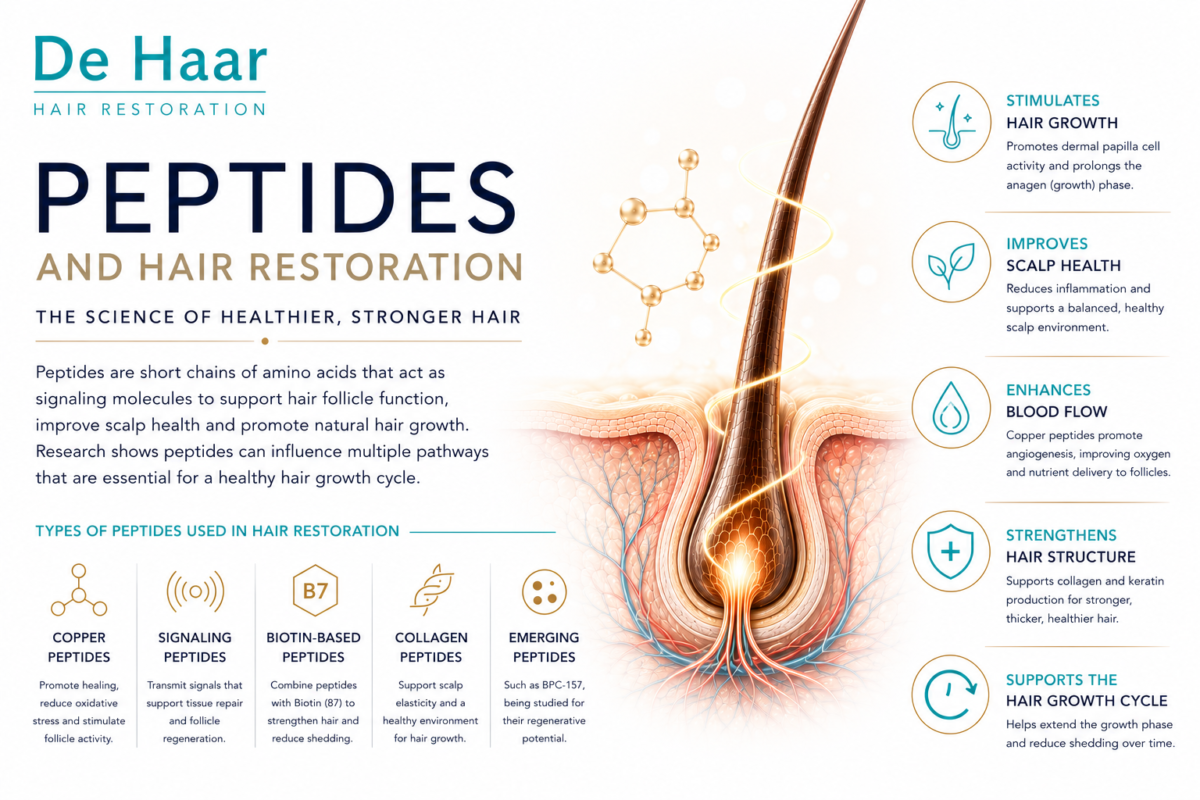
Peptides and Hair Restoration
Hair loss is a multifactorial condition affecting a significant portion of the global population. Its causes range from genetic predisposition and hormonal influences to environmental factors, nutritional deficiencies, medical conditions, and physiological stress. In recent years, peptides have gained increasing attention as a potential therapeutic option for promoting hair growth and improving scalp health. Peptides are short chains of amino acids that function as biological signaling molecules, regulating cellular communication, tissue repair, inflammation, and numerous physiological processes. Their ability to influence multiple pathways involved in hair follicle function has made them an exciting area of research within hair restoration medicine.
What Does the Research Show?
Hair loss, or alopecia, is one of the most common dermatological conditions and can have significant psychological and social consequences. The most prevalent form, androgenetic alopecia, affects both men and women and is primarily influenced by genetic and hormonal factors. Traditional treatments such as topical minoxidil and oral finasteride have demonstrated clinical effectiveness; however, they have limitations, including variable response rates, the need for long-term use, and the potential for side effects. Emerging research has identified peptides as a promising adjunctive therapy. Unlike conventional treatments that target a single mechanism, peptides may influence several biological pathways involved in hair growth and scalp health simultaneously. Although laboratory studies, animal research, and early human clinical studies have produced encouraging results, larger randomized clinical trials are still needed to establish standardized treatment protocols and determine their long-term effectiveness.
Hair growth occurs in a cyclical process consisting of three primary phases: the anagen (growth) phase, the catagen (transition) phase, and the telogen (resting and shedding) phase. The anagen phase is characterized by active proliferation of hair follicle cells and can last several years. The catagen phase is a brief transitional period during which the follicle regresses, followed by the telogen phase, when the hair is shed before a new growth cycle begins. Disruptions to this cycle, particularly a shortened anagen phase or prolonged telogen phase are central to many forms of hair loss. Effective treatment strategies aim to restore balance within the hair cycle by stimulating follicular activity, extending the growth phase, and reducing excessive shedding.
The Science Behind Peptides
Peptides have been shown to influence dermal papilla cells, which play a critical role in regulating hair follicle development, cycling, and regeneration. By promoting cellular proliferation and activating growth-related signaling pathways, peptides may enhance follicular activity and support new hair growth. Certain peptides, particularly copper peptides, have demonstrated the ability to stimulate angiogenesis the formation of new blood vessels. Improved blood supply enhances the delivery of oxygen and nutrients to hair follicles, supporting their metabolic demands and promoting healthier hair growth. Chronic inflammation of the scalp has been implicated in several forms of hair loss. Many peptides possess anti-inflammatory properties that may help reduce inflammatory signaling and create a healthier environment for follicular function.
Peptides may also stimulate the production of structural proteins such as collagen and keratin. Collagen helps maintain the integrity of the scalp’s extracellular matrix, while keratin is the primary structural protein of the hair shaft. Increased production of these proteins may contribute to stronger, thicker, and healthier hair. Some peptides appear capable of influencing the duration of the hair growth cycle by prolonging the anagen phase and delaying the transition into the telogen phase. This may result in increased hair density and reduced hair shedding over time.
Types of Peptides Used in Hair Restoration
Copper Peptides
Copper peptides are among the most extensively studied peptides in hair restoration. They have been shown to promote wound healing, reduce oxidative stress, stimulate angiogenesis, and enhance hair follicle activity.
Signaling Peptides
Signaling peptides, such as Acetyl Tetrapeptide-3, function by transmitting molecular signals that promote tissue repair, extracellular matrix remodeling, and follicular support. These peptides are commonly incorporated into topical formulations designed to strengthen hair and improve scalp health.
Biotin-Based Peptides
Biotin-based peptides combine the biological activity of peptides with vitamin B7 (biotin), an essential nutrient involved in healthy hair production. These formulations may help strengthen the hair shaft, improve follicular anchoring, and reduce hair shedding.
Collagen Peptides
Collagen peptides help support scalp elasticity and maintain the structural integrity of the extracellular matrix. While they do not directly stimulate new hair growth, they contribute to an environment that supports healthy follicle function.
Emerging Regenerative Peptides
Emerging peptides such as BPC-157 continue to be investigated for their regenerative properties. Early laboratory and animal studies suggest they may promote tissue repair and influence growth factor activity. However, clinical evidence supporting their effectiveness for hair restoration in humans remains limited, and additional research is needed before their role can be clearly established.
Clinical Applications
Peptide therapy is generally well tolerated and, when applied topically, is associated with relatively few reported side effects.
One of the most most efficient delivery methods combines peptide therapy with microneedling, which creates controlled micro channels within the scalp. These channels enhance peptide penetration while also stimulating the body’s natural wound-healing response, resulting in increased growth factor production and improved follicular stimulation. Beyond promoting hair growth, peptides may improve scalp tissue quality, reduce inflammation, support collagen remodeling, and strengthen existing hair. They are frequently used alongside established therapies such as topical or oral medications, platelet-rich plasma (PRP), low-level laser therapy (LLLT), and hair transplantation to optimize overall treatment outcomes. Individual responses vary depending on factors including age, genetics, the underlying cause of hair loss, and the degree of follicular miniaturization.
Peptides Compared with Conventional Treatments
Minoxidil and finasteride remain the gold-standard pharmaceutical treatments for androgenetic alopecia. Minoxidil primarily promotes hair growth by increasing blood flow around the hair follicle and stimulating follicular activity, while finasteride works by reducing levels of dihydrotestosterone (DHT), the hormone responsible for progressive follicular miniaturization in genetically susceptible individuals. Peptides differ because they may simultaneously influence multiple biological pathways involved in follicular health, including cellular communication, inflammation, angiogenesis, tissue remodeling, and extracellular matrix support.
Looking Toward the Future
The future of peptide-based hair restoration is promising. Ongoing research continues to identify novel peptide sequences, improve delivery systems, and better understand how individual peptides influence hair follicle biology. Advances in biotechnology may eventually allow clinicians to develop personalized peptide therapies tailored to an individual’s genetic profile and specific pattern of hair loss. Combination treatments integrating peptides with stem-cell-derived growth factors, platelet-rich plasma, exosomes (where appropriate and supported by regulations), and advanced microneedling technologies are also being actively investigated. As research continues to evolve, peptide therapy is becoming an increasingly valuable component of comprehensive hair restoration protocols.
Conclusion
Peptides represent one of the most exciting emerging developments in modern hair restoration. Through their ability to regulate cellular communication, reduce inflammation, promote tissue repair, support angiogenesis, and improve the health of the scalp environment, they offer a multifaceted approach to supporting healthy hair follicles.
At De Haar Hair Restoration, peptides are incorporated as part of a comprehensive, evidence-based approach to hair restoration. They can be particularly beneficial for patients experiencing diffuse thinning, female pattern hair loss, early androgenetic alopecia, or for supporting surrounding native hair before and after hair transplantation. When combined with advanced diagnostics, microneedling, platelet-rich plasma (PRP), low-level laser therapy (LLLT), and individualized medical treatment plans, peptide therapy helps to optimize scalp health, improve hair quality, reduce shedding, and support healthier, stronger hair over time. As research continues to advance, peptides are likely to play an increasingly important role in the future of personalized hair restoration medicine.
