
How many grafts do you need for a hair transplant?
One of the first questions people ask during a hair transplant consultation is, “How many grafts will I need?” The answer isn’t as simple as a single number. While many clinics advertise procedures based on graft counts, the truth is that two people with similar hair loss may require very different numbers of grafts to achieve an excellent result. Understanding what a graft is and what actually determines the number you need can help you set realistic expectations and appreciate why an individualized treatment plan is so important.
What Is a Hair Graft?
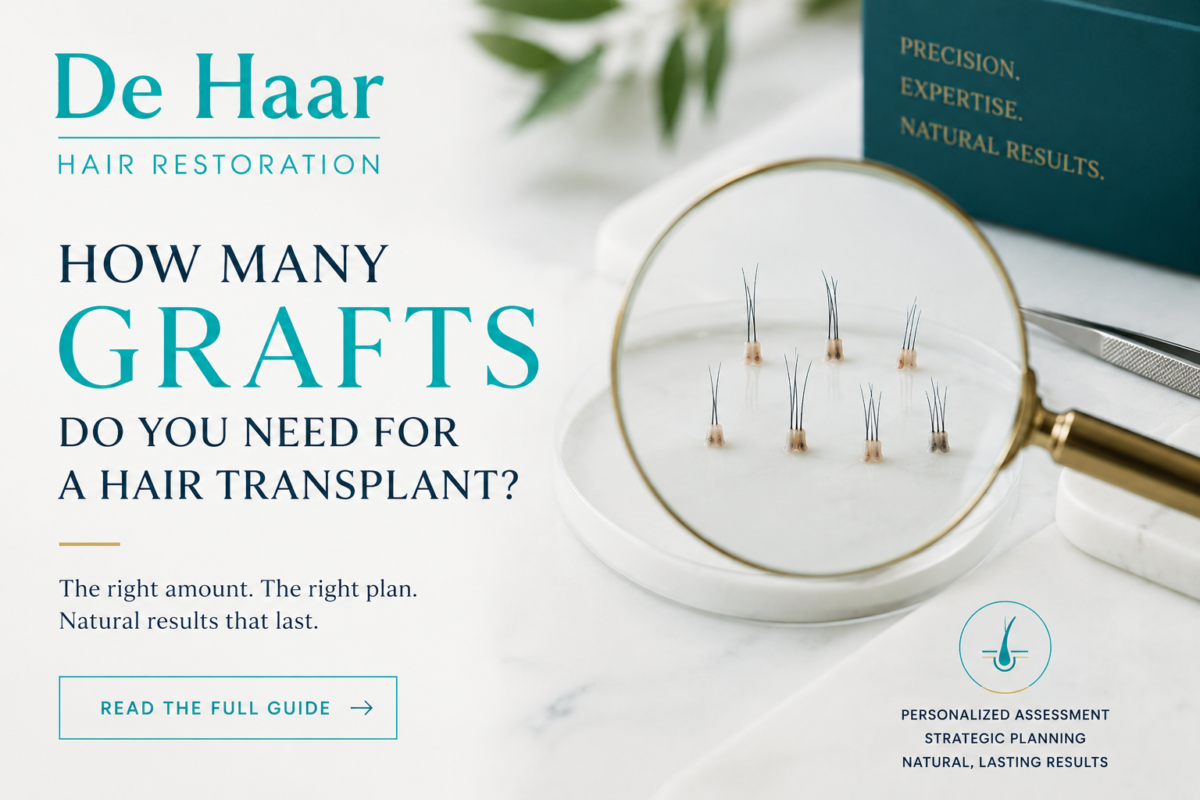
This is where many people become confused. A hair graft is not a single hair. It is a naturally occurring group of hair follicles removed together during a Follicular Unit Extraction (FUE) procedure. Each graft can contain one, two, three and occasionally four hairs but on average, one graft contains approximately 2 to 3 hairs, although this varies from person to person.
This equates to the following;
| Grafts | Approximate Number of Hairs |
| 1,000 | 2,000–2,300 hairs |
| 2,000 | 4,000–4,600 hairs |
| 3,000 | 6,000–6,900 hairs |
| 4,000 | 8,000–9,200 hairs |
This is why comparing clinics based solely on graft numbers can be misleading.
Why Two People Can Need a Different Numbers of Grafts.
Several factors influence how many grafts are required. The Size of the Bald Area The larger the area requiring restoration, the more grafts are generally needed. For example:
- Receding temples may require only 800–1,500 grafts.
- Frontal hairline restoration may require 1,500–2,500 grafts.
- Extensive hair loss affecting the front, mid-scalp, and crown may require 3,500–5,000 or more grafts, often over multiple procedures.
Hair Characteristics Matter
Your hair itself has a significant impact on the cosmetic outcome.
Factors include:
- Hair shaft thickness
- Straight versus curly hair
- Hair color
- Hair texture
- The contrast between your hair and scalp
For example, coarse, wavy hair generally provides greater visual coverage than fine, straight hair. Someone with thick, curly hair may achieve excellent coverage with fewer grafts than someone with very fine, straight hair.
Donor Hair Availability
The donor area is your most valuable resource. A surgeon must balance today’s needs with the possibility of future hair loss. Using too many grafts early can leave fewer options for future procedures if hair loss progresses. For this reason, responsible donor management is an essential part of long-term planning.
Future Hair Loss
Hair transplantation restores hair that has already been lost, but it does not stop the progression of genetic hair loss. If ongoing thinning is expected, your surgeon may recommend preserving donor grafts for future use and combining surgery with medical therapies such as finasteride, Dutasteride, minoxidil, or other evidence-based treatments.
Why More Grafts Does Not Always Mean Better Results
Some patients assume that receiving the highest possible graft count will produce the best outcome. In reality, this isn’t always true. Placing too many grafts into a limited area can compromise blood supply, reduce graft survival, and create an unnatural appearance. Likewise, overharvesting the donor area can leave visible thinning at the back and sides of the scalp. The goal isn’t to transplant the greatest number of grafts it’s to create the most natural and aesthetically pleasing result while preserving your donor hair for the future.
Why an Accurate Diagnosis Comes First
Before deciding how many grafts you need, it’s important to understand why you’re losing your hair.
Different conditions including androgenetic alopecia, telogen effluvium, alopecia areata, scarring alopecia, thyroid disorders, nutritional deficiencies, and certain medications can all cause hair loss, but not all are treated with surgery. A thorough evaluation helps ensure that hair transplantation is appropriate and that any underlying medical conditions are identified and managed before surgery.
There Is No “Magic Number”
Many websites suggest that a certain number of grafts corresponds to a particular stage of hair loss. While these estimates can be helpful, they should never replace an individualized consultation. Every patient’s goals, hair characteristics, donor supply, and pattern of hair loss are unique. The best treatment plan is one designed specifically for you, not based on a chart or online calculator.
Conclusion
The number of grafts you need is only one part of successful hair restoration. Equally important are careful diagnosis, thoughtful hairline design, preservation of the donor area, and long-term planning. At De Haar Hair Restoration, every treatment plan is customized after a comprehensive assessment of your hair loss pattern, donor supply, and future goals. Our objective isn’t simply to transplant the most grafts possible it’s to achieve a natural, lasting result that continues to look good for years to come.
