
Hairline Masculinization Transplants for Transgender Males
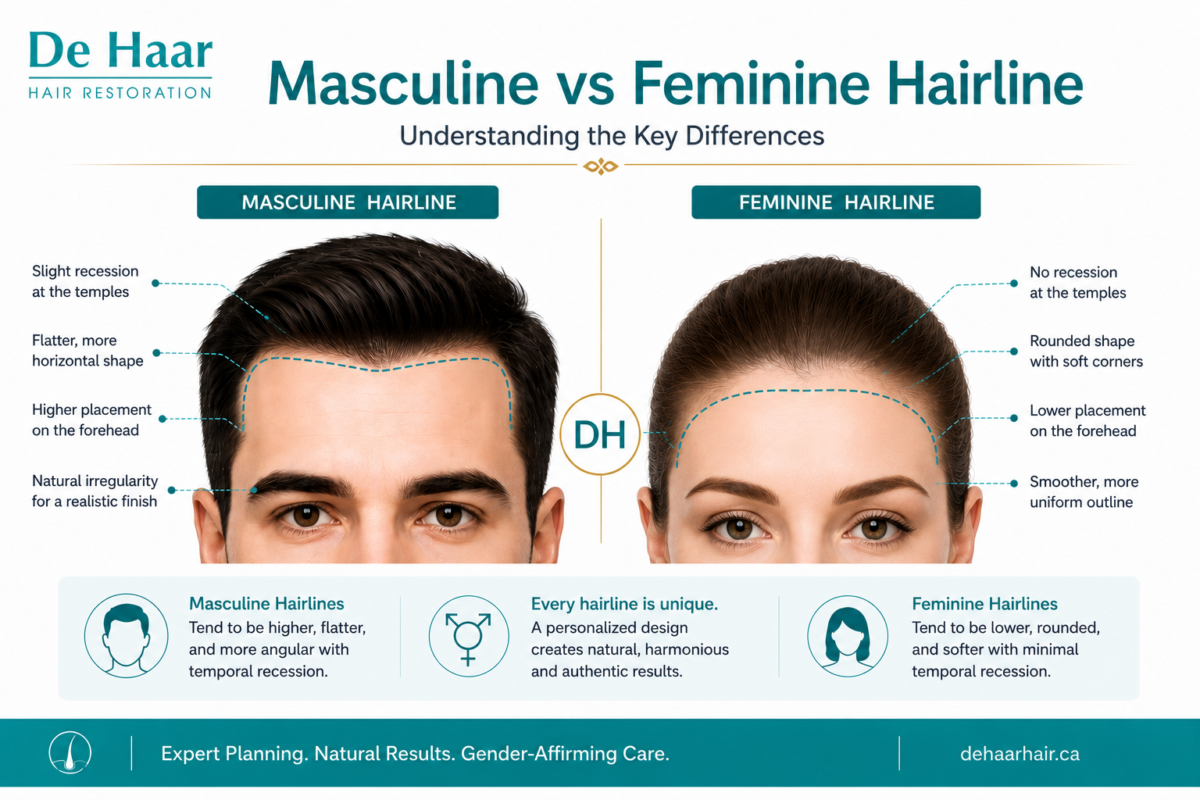
For many transgender men and transmasculine individuals, creating a masculine hairline can be an important step in aligning their appearance with their gender identity. While changes in facial hair, voice, and body shape are often discussed during gender-affirming care, the hairline is another defining facial feature that plays a significant role in how a face is perceived. The shape, height, and contour of the hairline contribute to the overall balance of the face. Masculine hairlines typically differ from feminine hairlines in subtle but important ways, including the position of the frontal hairline, the contour of the temples, and the overall shape across the forehead. Thoughtful hairline design can enhance facial harmony while creating a natural, masculine appearance that complements each individual’s unique facial features. Hairline masculinization is never about creating a single “ideal” hairline. Every face is different, and every patient has their own goals. The most successful results are achieved through careful planning that considers facial proportions, hair characteristics, donor hair availability, and long-term changes that may occur over time. Read about feminization transplants
What is Hairline Masculinization?
Hairline masculinization is a gender-affirming procedure designed to reshape the hairline, so it more closely reflects the characteristics typically associated with a masculine appearance. For many transgender men and transmasculine individuals, the hairline is an important facial feature that contributes significantly to how their face is perceived. Even subtle changes to the shape and contour of the hairline can have a profound impact on overall facial harmony. While testosterone therapy can produce many masculinizing changes throughout the body, it does not alter an existing feminine hairline. Hairline masculinization uses careful surgical planning and hair transplantation to reshape the frontal hairline and temples, creating a more masculine appearance while maintaining a natural result that complements the individual’s facial features. The goal is not simply to move the hairline higher or create more temple recession. Every hairline should be individually designed to suit the patient.
Characteristics of a Masculine Hairline
Although every hairline is unique, masculine hairlines generally share several distinguishing characteristics. Compared with feminine hairlines, they tend to sit slightly higher on the forehead and have a flatter, more horizontal central contour. The temples usually display a gentle, natural recession, creating the subtle temporal angles that are commonly seen in adult men. Natural masculine hairlines are also intentionally irregular. Rather than forming a perfectly straight line across the forehead, they contain slight variations in contour and hair direction that soften the appearance and avoid an artificial look. This irregularity is carefully recreated during hair transplantation using single-hair follicular units along the leading edge of the hairline. Hair density is another important consideration. A masculine hairline should appear natural rather than excessively dense or sharply defined. The transplanted hair is strategically distributed to create a gradual transition from the forehead to the thicker hair behind the hairline, mimicking the way hair naturally grows. One of the most important aspects of hairline masculinization is long-term planning. Hairlines naturally mature with age, and every design should take future changes into account. Creating an age-appropriate hairline that respects the limitations of the donor area helps ensure the result continues to look balanced and natural for many years. At De Haar Hair Restoration, we believe hairline masculinization is about much more than transplanting hair. It is the careful combination of facial aesthetics, surgical precision, and individualized planning that creates a masculine hairline that is both authentic and enduring.
“The goal is not to simply move the hairline higher, or increase temple recession. Every hairline should be individually designed to suite facial proportions, age, hair characteristics and ethnicity”
Planning Your Hairline
The success of hairline masculinization begins long before the procedure itself. Careful planning is the foundation of achieving a natural, masculine appearance that complements the individual and continues to look appropriate for years to come. Rather than following a standard template, every hairline should be designed specifically for the patient. One of the first considerations is facial proportion. The height of the forehead, the shape of the face, the position of the eyebrows, and the overall facial balance all influence where the hairline should be placed. Even small adjustments to the position or contour of the hairline can dramatically change the way the face is perceived. The goal is to create harmony between the hairline and the patient’s natural facial features. Hair characteristics are equally important. Hair colour, calibre, curl, wave, and the contrast between the hair and skin all influence how much density is needed to achieve a natural result. These factors help determine not only the design of the hairline but also the number of grafts that may be required to create the desired appearance. Donor hair availability is another essential part of the planning process. Because the donor area contains a limited number of permanent hair follicles, every graft is used strategically. A carefully designed treatment plan balances the your current goals with the need to preserve donor hair should additional procedures ever be wanted in the future. Long-term planning is particularly important. While transplanted hair is generally permanent, the surrounding native hair may continue to change over time. Designing an age-appropriate, balanced hairline helps ensure that the result remains natural as the patient ages and minimizes the likelihood of future revisions. Equally important is understanding the patient’s personal goals. Masculinity is not defined by a single hairline shape, and every individual has their own vision of what feels authentic to them. During the consultation, time is taken to discuss expectations, review design options, and develop a personalized surgical plan that reflects both the patient’s aesthetic goals and the principles of natural hairline design.
“At De Haar Hair Restoration, hairline planning is a collaborative process. We work closely with you to create a hairline that is both technically achievable and aesthetically balanced, with the goal of delivering results that look completely natural and affirming”
Hairline Masculinization with Hair Transplantation
Hair transplantation offers the ability to reshape far more than the frontal hairline alone. While creating natural recession at the temples is often one of the defining features of hairline masculinization, a comprehensive treatment plan may also include other facial features that contribute to a more masculine appearance. One of the most important areas is the frontotemporal region, where the frontal hairline meets the temples. In many individuals assigned female at birth, this area tends to have a smoother, more rounded contour. By carefully recreating the gentle temporal recession commonly seen in adult males, hair transplantation can transform the overall shape of the hairline while maintaining a natural appearance. These subtle changes often have a significant impact on facial perception without appearing obvious or overdone.
Hair transplantation can also be used to enhance other areas of the face when appropriate. Eyebrow transplantation may be performed to create a straighter, fuller eyebrow with characteristics that are more typically associated with a masculine appearance. Likewise, sideburn reconstruction can help establish stronger facial framing and create a seamless transition between the scalp hair and facial hair. For some patients, these additions further enhance gender affirmation and produce a more balanced overall result. Because Follicular Unit Extraction (FUE) transplants individual naturally occurring follicular units, transplanted hairs grow naturally and can be trimmed, groomed, and styled just like the surrounding hair. The surgeon carefully selects single or multi-hair grafts depending on the area being treated, ensuring that each transplanted hair matches the natural characteristics of the surrounding region.
“Hairline masculinization can easily be combined with eyebrow transplantation or additional facial hair transplantation as part of a broader gender-affirming treatment. Customized to your goals and designed to achieve natural, harmonious, and long-lasting results”
