Tuesday - Saturday 9:00 AM-5:00 PM(306) 522-2210hello@dehaarhair.ca2550 12 Ave #110, Regina, SK S4P 3X1

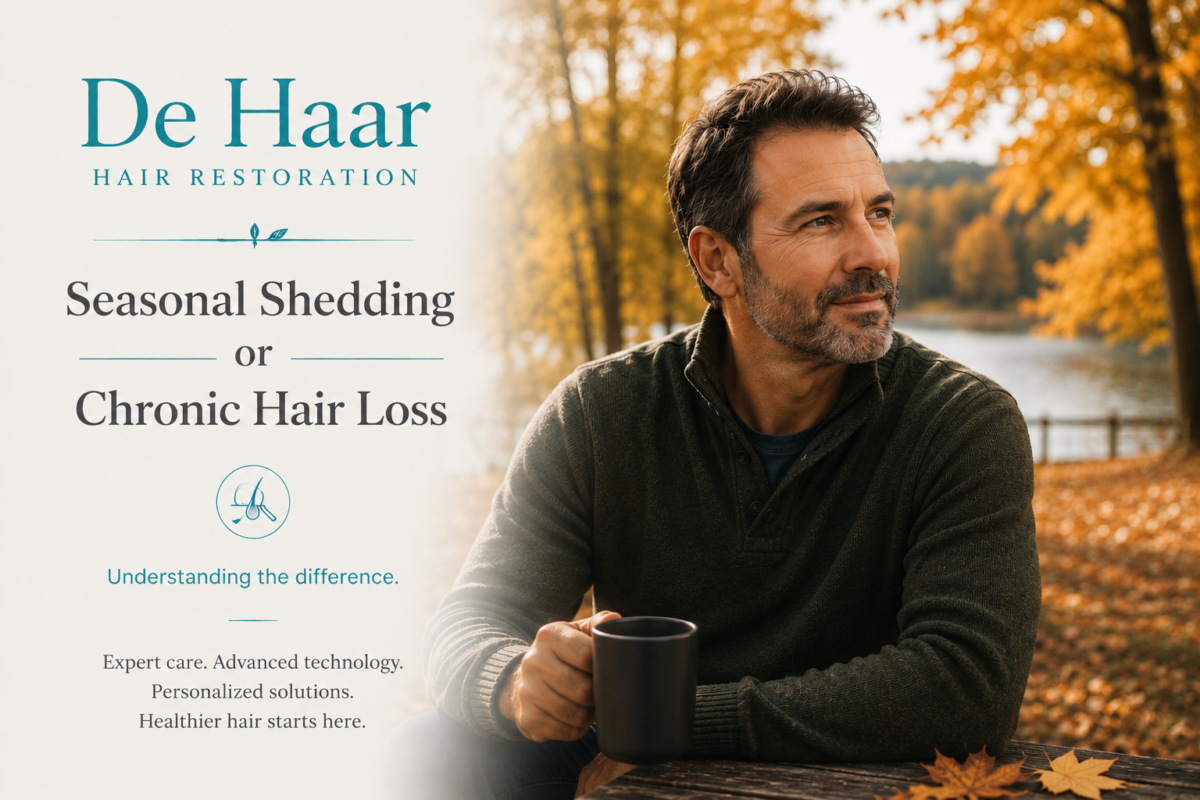
Some of us notice an increase in hair loss during certain times of the year. This is a natural phenomenon that occurs typically in the late summer and early fall months. although it can be alarming seasonal shedding is usually temporary and part of the normal hair growth cycle. What is happening here is the hair is entering the telogen phase of the hair growth cycle. This is the phase where the hair falls out and the follicle rests. It is a natural process that  does not result in you  losing all your hair.

On average people lose about 50 to 100 hairs per day but during seasonal shedding this number can increase up to 150 or more hairs. The exact reason isn’t fully understood but there are a few theories, some supported by research. During the summer more hair follicles are thought to remain in the anagen phase or growth phase to protect the scalp from UV rays and regulate body temperature, as the seasons change many of these follicles simultaneously  shift into the telogen phase leading to an increase in shedding.

Some scientists believe seasonal shedding is an evolutionary trait that is an inherited factor where  during warmer summer months humans retain more hair to shield their scalps and during the winter months the body may shed hair to conserve energy and allow for a phase of rest.

The amount of sunlight exposure can impact hormones like melatonin and prolactin which may influence the hair growth cycle. As daylight hours decrease in the fall,  hormonal shifts may push more hair follicles into the telogen phase.  Prolonged sun exposure in the summer can weaken and damage hair potentially triggering telogen effluvium, which is temporary hair loss. Increase sweating which causes an exposure to salts and exposure to chlorine during summer months may also irritate the scalp and contribute to hair loss.

During the telogen phase it is normal for one to notice more hairs on their pillow or perhaps in the hairbrush or shower however,  it’s important to differentiate between seasonal shedding and chronic hair loss. Seasonal shedding is a temporary increase in hair loss for a few weeks typically occurring around the same time each year. Chronic hair loss is caused by genetic factors such as sensitivity to DHT and exacerbated by other factors such as hormonal imbalances, medical issues, medications, and environmental issues. Chronic hair loss continues throughout the year while seasonal shedding usually lasts between two to three weeks and on occasion can last longer.

With seasonal shedding the density of your hair remains relatively unchanged however with chronic hair loss the density of your hair becomes less and less until you notice a considerable thinning of the hair.

There are steps you can take to manage seasonal shedding.

Maintaining a healthy diet and focusing on nutritional whole foods rich in  zinc, iron, biotin and vitamin D  all support healthy hair growth. Protein rich foods are essential for follicle health. Protect your scalp from UV exposure by wearing hat.  Meditation, yoga and exercise will help keep stress levels in check and a reduction in stress will also help you keep your hair. Limit the use of heat styling hair dryers and hair irons and avoid harsh clarifying shampoos that strip the hair of its natural oils. Consider topical treatments like minoxidil, hair oil treatments and scalp serums to promote hair and scalp health.

If you notice the shedding lasts longer than three months or is leading to noticeable thinning and bald spots make an appointment with a hair loss specialist. If  the shedding is accompanied by scalp irritation, redness or flaking it may be time to consult a doctor to help identify whether your hair loss is actually seasonal or caused by underlying factors like androgenic alopecia, hormonal imbalance and/or nutritional deficiencies.

The seasonal shedding of hair is a normal temporary phase of the hair growth cycle that tends to peak at certain times of the year and there is no cause for alarm. Focus on caring for your scalp and by incorporating a balanced diet, healthy habits, stress reduction and exercise, you can minimize the effects and assure your hair stays strong and vibrant year-round.


Alopecia is actually a range of conditions characterized by partial or complete hair loss typically on the scalp. The diagnosis of the specific type of alopecia is vital for effective treatment and management in preventing further damage. Your consultation with doctor Gerbrands will include a thorough evaluation of your medical history, sometimes blood tests and biopsies are required to identify the cause and especially If an autoimmune disease is suspected. This allows the patient to not only have their hair loss treated appropriately but they are able to notify their physician of the diagnosis before other symptoms present themselves in order to minimize damage to other organs in the body. Microscopic evaluation and trichoscopy are performed which measures the amount of hair in various areas of the scalp. This also allows the doctor to microscopically visualize the state of the scalp, hair and the follicles and includes an accurate measurement of the hair loss that has actually occurred. Trichoscopy can also show inflamed or scarred areas, these can sometimes indicate if the damage is permanent or temporary. Trichoscopy allows for measurements of all areas of the scalp including areas that may be used for possible future transplantation if required.

Because hair loss is a complex condition with many factors contributing to the cause it is important to identify all the causes so that a multifaceted approach can be initiated to address all of these causes, giving you the best chance of maintaining and re generating your hair. It is always best to consult a physician or hair loss specialist to get the facts about the causes contributing to your hair loss. Initiating over the counter supplements may cause more hair loss in particular in cases where deficiencies are suspected because certain types of hair loss are caused by an overabundance of certain elements.

Androgenic alopecia, both male and female pattern baldness is the result of genetics but is often exacerbated by many external factors such as environmental toxins, medications ad even hair care habits. Early intervention in androgenic alopecia allows for one to keep their hair much longer and with the use of medications, slow the progression of their loss and regenerate hair growth from any viable follicles. There are several types of alopecia that are caused by autoimmune conditions. This is where one’s own immune system attacks the hair follicles. This type of hair loss often appears as patchy hair loss with bald spots. There are times where a patient may not realize they have an autoimmune disorder, and their first symptom may be hair loss. An accurate diagnosis can ensure the patient receives the proper treatment from their doctor with therapies and medications specific to the type of autoimmune disease present. Some of these medications may include anti-inflammatories, corticosteroids or immunomodulators medications. Treatment is dependant on the actual diagnosis brought about with a thorough medical history, including the specific environmental circumstances surrounding in your hair loss and testing. Cicatricial Scarring Alopecia is where inflammation destroys the hair follicles leading to scar tissue formation. This type of hair loss generally presents with redness scaling or pain in the affected areas. It’s crucial to get early treatment with medications to prevent irreversible damage. Frontal Fibrosing Alopecia is actually a variant of Scarring Alopecia which is thought to be of both autoimmune and hormonal causes. This often presents with a receding hairline and can include a loss of eyebrows.

Telogen Effluvium is hair loss that can be seasonal and can often be initiated by stress, illness, hormonal changes and nutritional deficiencies. Telogen effluvium presents itself typically as diffuse thinning or the shedding of hair. With the appropriate management of the underlying cause, this is a reversible condition. It is important to note that diffuse thinning or shedding of the hair can have many causes and telogen effluvium is only one of them. Anagen Effluvium is rapid hair loss often due to toxic agents like chemotherapy medications or radiation. It is a sudden widespread hair shedding that occurs during the growth phase. This type of hair loss is usually temporary lasting a few months up to a year or more.

Traction alopecia is caused by prolonged tension on the hair from tight hairstyles and ponytails and generally presents as hair loss along the hairline or sides and in any area where the hair is under tension. Intervention can prevent permanent follicular damage. Trichotillomania is a psychological condition involving compulsive hair pulling. This type of hair loss is where mental health support and behavioral therapy can be most effective when incorporated into the treatment regime. Tinea Capitus is a fungal infection of the scalp. Scaly patches, broken hairs and sometimes painful lesions are present. Once the fungus is identified, proper treatment can be initiated to prevent further complications and permanent loss.

Alopecia from nutritional deficiencies such as iron, zinc, biotin, vitamin D and protein can cause generalized hair thinning. Correcting deficiencies can reverse this type of hair loss however it is important to identify the deficiency as an overabundance of some elements for example, vitamin D, can also contribute to hair loss.

A board-certified hair loss specialist is able to diagnose the cause and distinguish between reversible and permanent forms of hair loss. This ensures that the appropriate therapy, treatment, medical, lifestyle or surgical intervention is initiated. Early identification and treatment is key to prevent, arrest and even sometimes reverse hair loss with the many types of alopecia.


There are conditions and diseases humans can suffer or be prone to due to the lack of a robust immune system and,  on the other hand there are conditions that are caused by an overreaction of our immune systems. Psoriasis belongs to this latter group. A condition where our immune system just doesn’t know when to quit.

Psoriasis is an autoimmune condition that causes skin cells to hyper proliferate. It is an over reaction of the immune system that causes inflammation that leads to the over production of skin cells. Psoriasis can affect any part of the body including the scalp. Skin cells accumulate on the skin, piling up,  causing thick scaly patches and plaques. These scales often flake off causing dandruff. Generally new skin cells grow approximately every 30 days but if you have scalp psoriasis new skin cells can grow and move to the skin surface as early as three to four days creating the build up that causes the plaques.

Psoriasis of the scalp is often exacerbated by genetics, hormonal and environmental factors. Scalp psoriasis is generally diagnosed through a trichoscopic evaluation. In some cases, a skin biopsy may be required to confirm the diagnosis. Seborrheic dermatitis and fungal infections can also coexist with scalp psoriasis.

Scalp psoriasis presents with well defined, red, purple or grey thickened patches or plaques of the scalp with overlying silvery white scales.  These scaly patches can be painful, sometimes cracking and bleeding. They can be extremely itchy,  affecting one’s sleep and interfering with one’s ability to relax thereby causing stress. Psoriasis of the scalp can be localized, for example at the hairline or back of the head but in some cases, it may involve the entire scalp. Severe cases scalp psoriasis can present with temporary localized hair loss. In chronic cases of scalp psoriasis, scarring alopecia can develop,  putting the patient at risk for permanent loss of the hair follicles.

Flare ups in scalp psoriasis can differ from person to person and there are many triggers that exacerbate the problem such as certain prescription medications, dry skin, certain foods and environmental factors. Currently there is no cure for scalp psoriasis, but it can be managed, and remissions are possible.

A few things you can do at home to boost your treatment regime is to use a non-foaming facial cleanser such as CeraVe  which can help by cleansing and moisturizing the areas of skin close to the hairline, avoiding soap residue deposits in this area. You may also consider adopting an anti-inflammatory diet which may help limit your psoriasis flare ups. Incorporating foods such as leafy greens, spinach and kale, oily fish such as mackerel salmon and lake trout, cooking oils such as olive oil, ghee, coconut and avocado oil,  whole foods have shown to help in minimizing flare ups.

Food and drinks that have been implicated in flare ups and you may want to avoid are dairy products such as cows milk, seed oils such as canola, soybean, sunflower, corn oil, safflower and sesame oils,  grains that contain gluten such as wheat and nightshade vegetables such as peppers,  potatoes and tomatoes. Taking a little time for oneself every day to deal with the stresses of everyday life has also shown to be helpful in reducing flare ups.

It’s important to seek treatment for scalp psoriasis as soon as possible to prevent infections, scarring and hair loss and improve the quality of your life.

Every individual’s immune system is unique to themselves. A treatment regime that works for a particular individual may not work best for someone else. Treatments in some cases require frequent adjustments until what works for that individual’s immune system is achieved, sending the psoriasis into remission. With the advancement in pharmaceuticals and a greater understanding of the immune system, treating scalp psoriasis effectively is achievable.

A combination of different modalities can be very effective in treating scalp psoriasis. There are medicated creams, lotions, gels and shampoos in addition to supplements, oral medications, phototherapy, medicated patches  and injectable medications that effectively calm the immune system. Scalp psoriasis is notoriously unpredictable, and most people will have some flare ups throughout their lives, but it can be well managed.  With a good treatment regime, it can also go into remission for years so there is every reason to stay positive, with patience you’ll see results.


Senescent Alopecia is a gradual reduction in hair density and thickness that occurs as part of our natural aging process. Typically, it begins in our 30s or 40s and becomes more noticeable with age.

Unlike androgenetic alopecia or genetic hair loss, age-related thinning affects both men and women and the hair loss is more uniform across the entire scalp rather than in specific patterns. Hair follicles shrink overtime resulting in thinner, finer hair strands and a slower growth cycle. This can lead to a less voluminous appearance and in some cases, especially those with already fine hair, noticeable scalp exposure.

While you cannot completely stop this process there are several strategies to slow it down considerably and maintain healthier thicker hair for as long as possible. Incorporating a protein rich diet that includes daily requirements of zinc, biotin, iron, omega-3 fatty acids and vitamin D, E and B complex are critical for hair health. Proper hydration also helps support the scalp and follicles. Foods such as eggs, fatty fish, nuts, seeds, spinach and sweet potatoes will also support hair growth.

Using mild shampoos and conditioners that do not have harsh chemicals or sulfates will also help. Look for ingredients like minoxidil, peptides and keratin as these ingredients will help create the appearance of thicker hair. Regular scalp massage and medical treatments such as minoxidil (Rogaine) will also help.

Avoid excessive heat when drying the hair, styling irons, over brushing and harsh chemical treatments. Speak with your healthcare provider about managing menopause or andropause symptoms which are hormonal changes that affect the hair. Hypothyroidism and hyperthyroidism can exacerbate hair thinning so it may help to have your thyroid checked by your healthcare provider on your yearly physical exam.

Chronic stress can accelerate thinning through a condition called telogen effluvium so managing stress is critical to preventing a great deal of this hair loss. If you have advanced thinning, hair restoration such as transplants may be an effective option. If you are concerned about hair loss it is recommended to speak with a board-certified hair loss specialist.


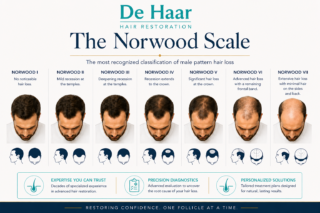
Male androgenic alopecia is the most common form of hair loss in males and effects up to 30 to 50% of men by the age of 50. Androgenic alopecia is basically a genetically predetermined condition involving the body’s response to male hormones. Male androgenic alopecia is often regarded as a minor condition and not an actual disease, but men living with the impacts of hair loss can attest to the anxiety and depression it causes. Androgenic alopecia and its link to other pathologies is now being explored and although inconclusive at this point, some studies suggest that androgenic alopecia may play a role in an increased risk factor in cardiovascular disease, prostate cancer, and atherosclerosis.

Androgenic alopecia is a condition caused by multiple genes. Multiple locations on chromosomes have been identified. Two of these locations were on the X chromosome, referred to as the AR gene. It was once thought that the X chromosome was solely responsible for genetic hair loss in men due to strong association. The function of the AR gene is in the production of androgen. The role of androgen in alopecia is well established but studies show that even normal levels of androgen is sufficient enough to cause androgenic alopecia in genetically susceptible males.

Attempts have been made to predict those who will have androgenic alopecia using genetic risk scores. Hair that grows along the sides and back of the scalp is genetically resistant to the effects of androgen and this is why they are mostly permanent. You may continue to lose androgen sensitive follicles in the crown and front of the scalp, but androgen resistant follicles will continue to produce hair throughout life.

If your maternal grandfather has androgenic alopecia, you are more likely to have it, and if your father has androgenic alopecia, you are twice as likely to have it also. Androgenic alopecia affects nearly two thirds of males to a significant degree and the risk increases with age.

Studies show that balding men are less likely to be chosen for jobs requiring dealing with the public and less likely to be chosen as partners in relationships. Bald men can often appear to be as much as 10 years older than they actually are. Some handle their condition well with little effect on their social functions but for those who are in greater emotional distress, anxiety and depression severely affects their lives. On the positive side men who are bald are perceived by society as good leaders, strong, bold and masculine.

Advancements in transplantation methods are benefitting and changing the lives of those who are dissatisfied with their appearance. Hair transplantation is now withing reach of the general public being more affordable than ever before. More and more men are overriding the genetic factor and taking advantage of transplantation to significantly improve the many aspects of their lives.

Tuesday - Saturday 9:00AM-5:00PMSunday and Monday - CLOSED2550 12 Ave #110, Regina, SK S4P 3X1(306) 522-2210hello@dehaarhair.ca

Copyright © 2026 De Haar Hair Restoration. All Rights Reserved.