
How Do I Choose The Best Hair Transplant Surgeon?
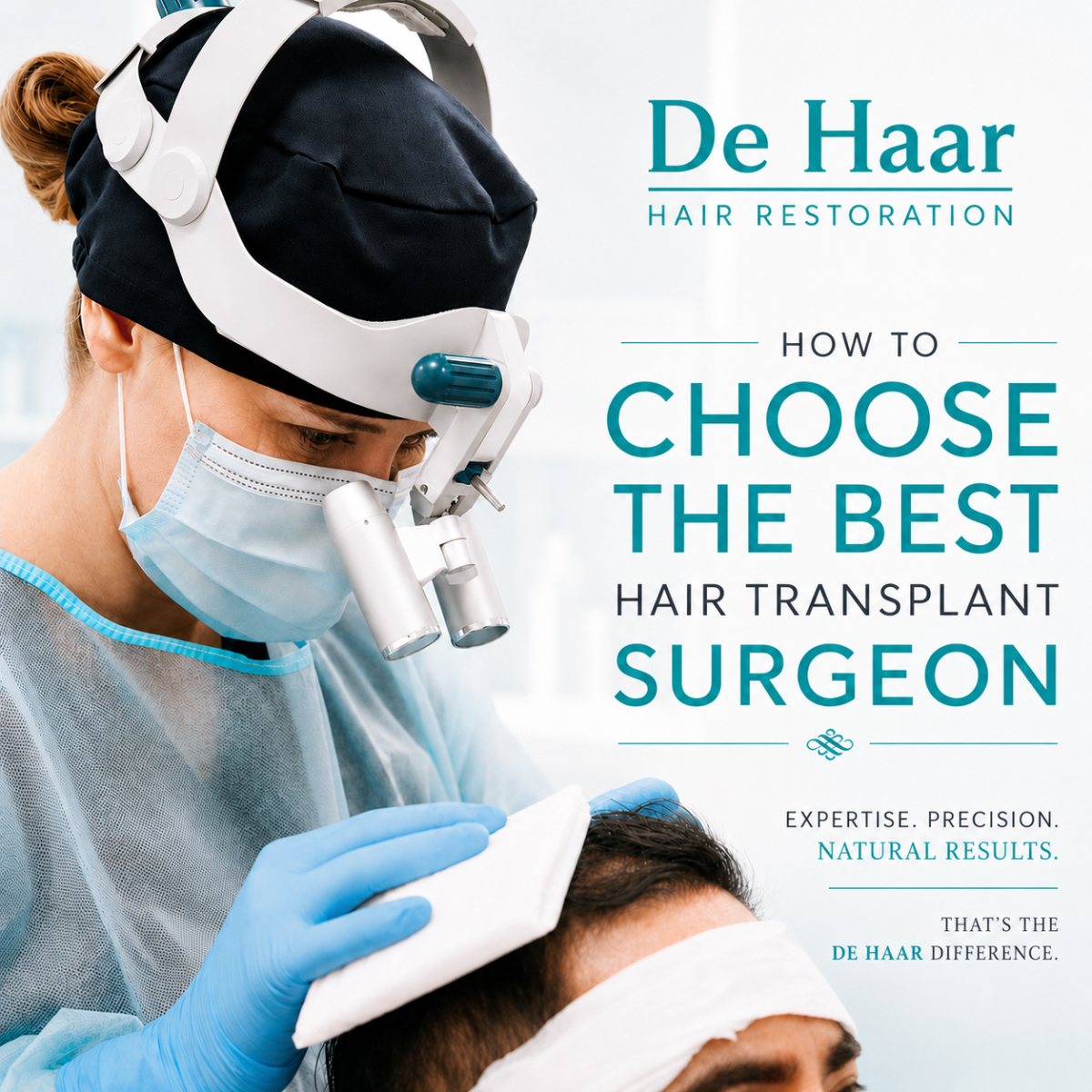
To choose a qualified hair transplant surgeon, you should prioritize board-certified medical expertise, direct physician involvement, and long-term donor management rather than marketing and low pricing. Legally, any doctor with a medical license can perform hair restoration surgery without specific specialized hair restoration surgical training. It is illegal for technicians to perform the surgical aspects of a hair transplant surgery such as harvesting the strip in a strip surgery, harvesting follicles from the scalp or making any incisions into the scalp.
- Verify Credentials and Affiliations
Do not rely on a clinic’s self-proclaimed titles and statements. Look for specialized, rigorous medical training in hair transplantation.
- ABHRS Certification: Check if they are certified by the American Board of Hair Restoration Surgery (ABHRS). This is the only certification recognized by major global societies
- Core Specialty: Confirm they are board-certified (AMA or CMA) licensed physician with additional specialties and additional training and certification in hair restoration surgery
- ISHRS Professional Memberships: Look for membership in the International Society of Hair Restoration Surgeons (ISHRS)
- Years of Experience: Find out how many year your surgeon has been performing hair transplantation
- License Check: Run the doctor’s name through their local state medical board directory to ensure they have an active license with no outstanding disciplinary actions
- Check Before-and-After Portfolio
Evaluate their work using a critical eye. It is also key to remember not everyone has the same donor supply, goals or resources so the surgeon must work to fulfill the patients’ needs in all aspects. Ask about photos of results you see.
- High-Resolution Quality: Avoid blurry, dimly lit, or inconsistently angled photos designed to mask poor results
- Natural Hairlines: Examine the angle, direction, and density of the hair placement; a quality transplant should be completely undetectable
- Evaluate the Consultation and Clinic Structure
A proper consultation is a medical evaluation, not a transaction. Book an initial session and watch out for specific red flags:
- The Doctor should give you a diagnosis on the cause of your hair loss and do further testing if illness is suspected.
- A Great Doctor: will assess you and give you the best options for you and your circumstances and may even recommend not doing a hair transplant if you are not a good candidate with a thorough explanation as to why.
- Doctor-Led Care: The physician must design your hairline, map out graft counts, and perform the critical surgical steps like incisions and follicle harvesting.
- A Trichoscopy exam is performed in offices where serious consideration as to your donor supply is taken into account.
- Avoid “hair mills” where independent, unlicensed technicians perform the actual surgery.
- Patient Volume: Ask how many procedures the surgeon performs per day. A high-quality surgeon typically schedules only 1 or 2 patients daily to maintain focus.
- Long-Term Planning: Because hair loss is progressive, a reliable doctor plans your hairline based on your future aging patterns, ensuring you do not completely deplete your finite donor area hair supply.
- After Transplant Care: a professional and experienced clinic will provide an excellent after care and follow up program.
What to Avoid
- High-pressure tactics: Limited-time discounts or sales calls pushing you to book a surgery date immediately.
- Guaranteed results: Avoid any doctor who tells you that 100% of your grafts will take or that your original teenage hair density is achievable.
- Technician-only operations: Clinics where you do not meet or speak with the actual licensed doctor until the day of the procedure.
- No Donor Area assessment: Avoid committing to a surgery where your scalp and donor density has not been thoroughly assessed.
- No Long term plan: A long term plan is an absolute must.
Bottom Line
- Remember ABHRS Trained Surgeon
- ISHRS Member
- Years of Experience
- Quality Work
- Ethical Practice and Excellent Reputation
Important Note: Many clinics are happy to schedule you a surgery and take your donor hair follicles to transplant and do not emphasize that you have a limited supply. You may initially be thrilled with the results, but what they do not tell you is what happens when the area surrounding the transplant continues to thin out. This factor is always addressed with a good surgeon and this is why it is critical to know who you are dealing with, making sure they are first and foremost an ethical practice. Overharvesting of the donor supply area is a huge problem, many unscrupulous clinics take advantage leaving you to deal with the aftermath down the road.
Please do your homework and follow these guidelines so you are not caught off guard dealing with issues down the road.
