

The Genetic Factor in Male Hair Loss
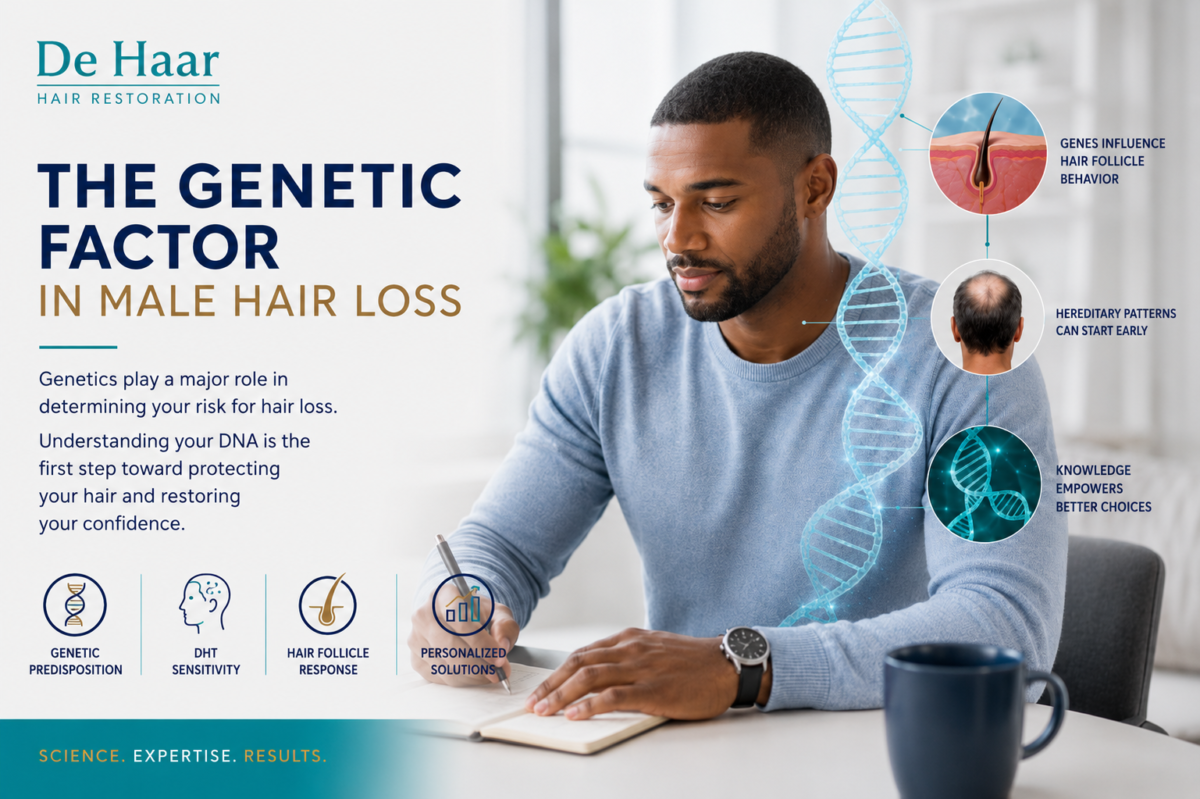
Male androgenic alopecia is the most common form of hair loss in males and effects up 30 to 50% of men by the age of 50. Androgenic alopecia is basically a genetically predetermined condition involving the body’s response to male hormones. The body’s response to male hormones causes hair loss through a genetically determined sensitivity to dihydrotestosterone (DHT), a potent byproduct of testosterone. This process, medically known as androgenetic alopecia, relies on how the scalp’s hair follicles interact with this specific hormone.
The biological process occurs through the following sequential steps:
The Conversion of Testosterone
The body naturally produces testosterone, the primary male sex hormone. Within certain tissues, including the scalp, an enzyme called 5-alpha reductase (5-AR) binds to testosterone. This enzyme converts a small percentage of circulating testosterone into DHT. DHT is a significantly more potent androgen, meaning it binds to hormone receptors with much higher affinity.
Genetic Sensitivity and Receptor Binding
Having high levels of testosterone or DHT does not automatically cause baldness. Instead, hair loss depends on the androgen receptors located within the cells of the hair follicles.
- Men who experience male pattern baldness have variations in their AR (Androgen Receptor) gene
- This genetic variation makes the receptors on the top, front, and crown of the scalp hypersensitive to DHT
- Follicles on the back and sides of the head lack this genetic sensitivity, which is why it is considered the donor area
Follicular Miniaturization
When DHT binds to these highly sensitive receptors, it alters the cellular behavior of the hair follicle. It triggers a destructive process called miniaturization. With this shortened growth phase normal hair grows for approximately two to seven years (the anagen phase) before resting and shedding. DHT forces the follicle to radically shorten this growth window. With each subsequent growth cycle, the physical follicle constricts and shrinks. Because the follicle is smaller and has less time to grow, the hair strands become progressively thinner, shorter, and more brittle. Eventually, the terminal (thick, dark) hairs degrade into thin miniaturized hairs.
Delayed Regrowth and Inactivity
As DHT continues to overstimulate the sensitive receptors, the resting phase (telogen) of the hair cycle becomes longer. It takes much longer for the follicle to start growing a new hair after the old one falls out. Eventually, the follicle miniaturizes so severely that it becomes completely inactive, permanently losing the ability to break through the skin surface.
Male androgenic alopecia is often regarded as a minor condition and it is not an actual disease, but men living with the impacts of hair loss can attest to the anxiety and depression it causes. Androgenic alopecia and its link to other pathologies is now being explored and although inconclusive at this point, some studies suggest that androgenic alopecia may play a role in an increased risk factor in cardiovascular disease, prostate cancer, and atherosclerosis.
The AR and other Genes
Androgenic alopecia is a condition caused by multiple genes. Multiple locations on chromosomes have been identified. Two of these locations were on the X chromosome, referred to as the AR gene. It was once thought that the X chromosome was solely responsible for genetic hair loss in men due to strong association. The function of the AR gene is in the production of androgen.
The role of androgen in alopecia is well established but studies show that even normal levels of androgen is sufficient enough to cause androgenic alopecia in genetically susceptible males. Attempts have been made to predict those who will have androgenic alopecia using genetic risk scores. Hair that grows along the sides and back of the scalp is genetically resistant to the effects of androgen and this is why they are mostly permanent. You may continue to lose androgen sensitive follicles in the crown and front of the scalp, but androgen resistant follicles will continue to produce hair throughout life.
If your maternal grandfather has androgenic alopecia, you are more likely to have it, and if your father has androgenic alopecia, you are twice as likely to have it also. Androgenic alopecia affects nearly two thirds of males to a significant degree and the risk increases with age.
What Studies Show
Studies show that balding men are less likely to be chosen for jobs requiring dealing with the public and less likely to be chosen as partners in relationships. Bald men can often appear to be as much as 10 years older than they actually are. Some handle their condition well with little effect on their social functions but for those who are in greater emotional distress, anxiety and depression severely affects their lives. On the positive side men who are bald are perceived by society as good leaders, strong, bold and masculine. Advancements in transplantation methods are benefitting and changing the lives of those who are dissatisfied with their appearance. Hair transplantation is now affordable and within reach of the general public. More and more men are overriding the genetic factor by taking advantage of transplantation thus acquiring a permanent solution to their genetic disposition and significantly improving many aspects of their lives.
Conclusion
Although your genes may influence whether you develop androgenetic alopecia, they do not determine your future. Modern hair restoration has transformed the way we manage hereditary hair loss, offering effective medical treatments that can slow progression, preserve existing hair, and, for suitable candidates, restore permanently lost hair through transplantation. The key to successful treatment is early diagnosis. The sooner androgenetic alopecia is identified, the more options are available to protect your existing hair and achieve the best possible long-term outcome. Whether treatment involves medications, regenerative therapies, hair transplantation, or a combination of approaches, every successful plan begins with understanding the underlying cause of your hair loss.
At De Haar Hair Restoration, we provide comprehensive hair loss assessments to accurately diagnose the cause of your thinning hair and develop a personalized treatment plan based on your individual needs and goals. If you’ve noticed your hair becoming thinner, your hairline receding, or your crown beginning to lose density, don’t wait for the condition to progress. Early intervention offers the greatest opportunity to preserve your hair and achieve natural, lasting results.
